Concrete Foundations & Footings
The solid base that keeps your structures safe and level for decades.
The Most Important Part of Any Structure
Your foundation is literally what holds everything up. Whether you're building a home addition, a garage, a workshop, or a retaining wall, the foundation has to be right. Cut corners here and you'll see cracks in walls, doors that won't close, and structural problems that cost tens of thousands to fix. Get it right from the start, and your structure will stand strong for generations.
We've poured foundations for all types of structures across Upland, CA. Our crew understands local soil conditions, building codes, and the techniques that ensure your foundation stays level and crack-free. This isn't work for weekend DIYers or contractors who mostly do decorative concrete. Foundations require expertise, precision, and a commitment to doing things right even when nobody will see the finished work.
Types of Foundations We Build
Different structures need different foundation types. Here's what we typically install:
- Concrete footings: These support walls, posts, and columns by spreading the load over a larger soil area. Essential for any structure.
- Slab foundations: A thick concrete slab serves as both foundation and floor. Common for garages, shops, and additions.
- Stem wall foundations: Footings support short walls that raise the structure above ground level. Good for areas with drainage concerns.
- Grade beams: Reinforced concrete beams that connect footings and support walls. Used in areas with expansive soil.
- Pier and beam foundations: Concrete piers drilled deep into stable soil support the structure. Ideal for slopes or poor surface soil.
What Goes Into a Proper Foundation
Foundation work starts with understanding your soil. We often recommend soil testing to determine bearing capacity and identify potential problems like expansive clay or high water tables. This information tells us how deep to dig, how wide to make footings, and whether special reinforcement is needed. Skipping this step is gambling with your structure's future.
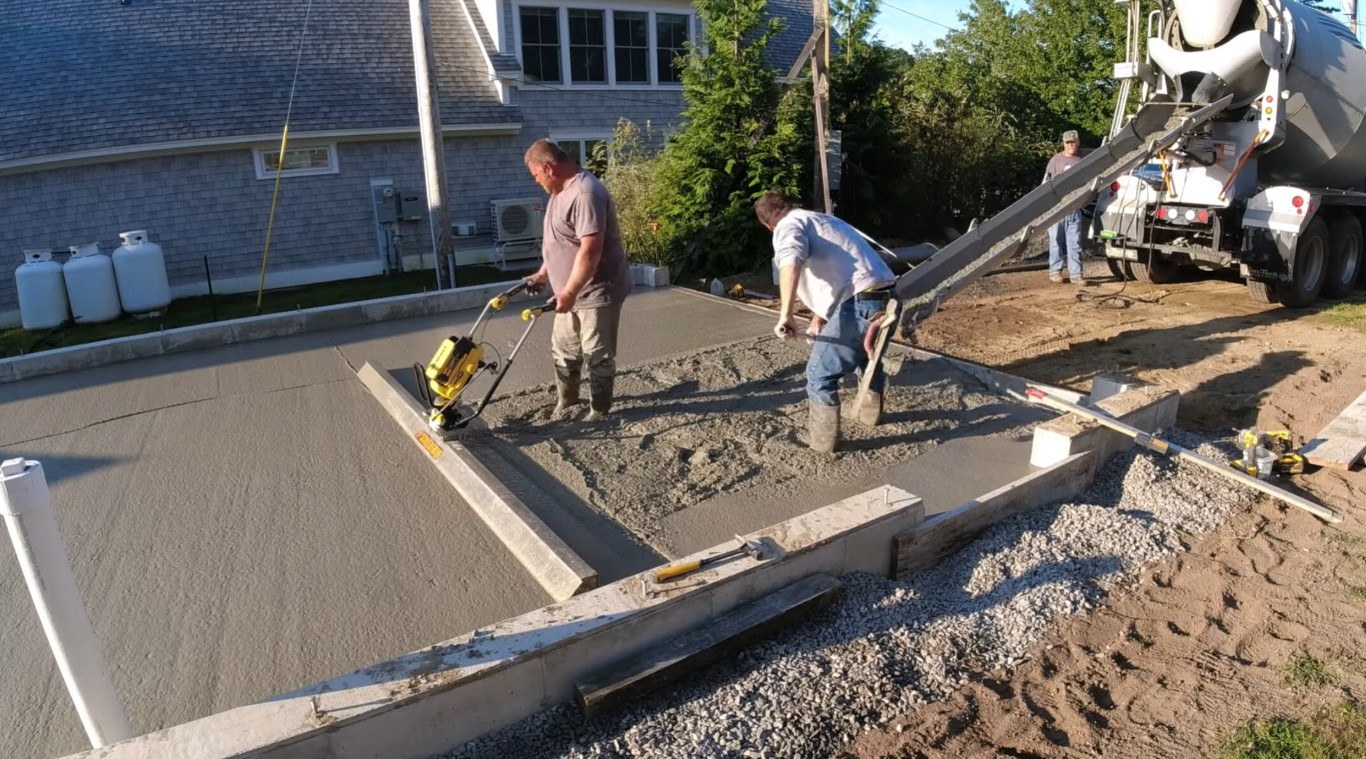
Next comes excavation to the proper depth, below the frost line and down to stable soil. We level and compact the excavation, then add gravel for drainage. Forms are set precisely to the design dimensions, and rebar is placed according to engineering specifications. The concrete pour must happen all at once to avoid cold joints that can weaken the foundation. Finally, we vibrate the concrete to eliminate air pockets and finish the surface smooth.
Reinforcement and Engineering
All our foundation work includes proper reinforcement. Rebar adds tensile strength to concrete, which is naturally strong in compression but weak in tension. The size, spacing, and placement of rebar matters immensely. We follow engineering specifications or building code minimums, whichever is stricter. For larger projects, a structural engineer designs the foundation to handle the specific loads and soil conditions at your site.
Why Foundation Quality Matters
A failing foundation can destroy a structure. We've seen garages with doors that won't open because the foundation settled. We've seen additions separating from houses due to inadequate footings. We've seen retaining walls that toppled over because the footing wasn't deep enough or wide enough. These failures cost huge amounts to repair, often more than proper installation would have cost in the first place.
Good foundation work takes more time and costs more upfront than shoddy work. But it's not something you can come back and fix easily later. Once your structure is built on the foundation, any foundation repairs mean tearing things apart and starting over. That's why we insist on doing it right the first time. Our reputation depends on structures that stand the test of time. Visit our homepage to learn more about our approach and see examples of our foundation work.
Working With Permits and Inspections
Foundation work almost always requires building permits and inspections. That's a good thing because it ensures proper oversight. We handle the permit process and schedule all required inspections. Our work passes inspection the first time because we follow code and engineering specifications exactly. This protects you and gives you documentation that the work was done properly, which helps if you ever sell your property.