
Loading...
Serving Upland, CA and surrounding areas. (213) 836-7114
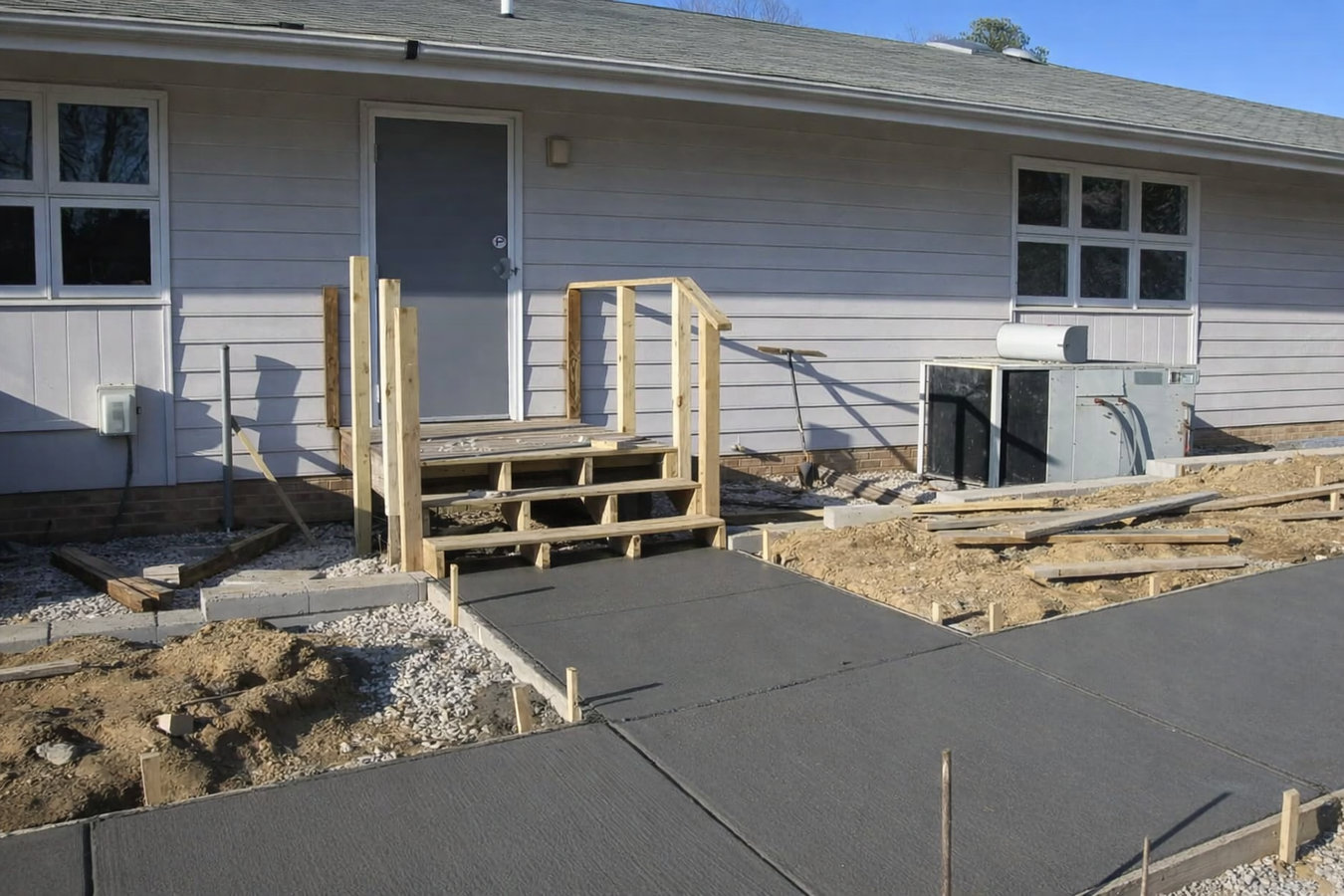
Cracked, heaving, or missing walkways are a safety risk and an eyesore. We build concrete sidewalks in Upland that are properly formed, correctly sloped, and built on a base that handles local soil conditions.
Concrete sidewalk building in Upland means removing the old surface or preparing bare ground, compacting the base, forming the slab, and pouring - most residential walkway projects take one to two days of active work, with the new surface walkable within 24 hours.
The part homeowners do not always see - the base preparation - is what determines whether a new sidewalk stays level and crack-free or starts heaving within a couple of seasons. In Upland's older neighborhoods, where mature trees send roots under the walkway and clay soils shift with the wet-dry cycle, getting that foundation right is not optional. If you are also thinking about the driveway approach that connects to the street, our concrete driveway building page covers what goes into that work alongside a new sidewalk.
Every project we do is permitted through the City of Upland when required, which means a city inspector signs off on the work. That extra step protects you and keeps your property records clean.
If one slab has risen higher than the one next to it, creating a raised edge that was not there before, the ground underneath has shifted. In Upland, clay-heavy soil expanding and contracting through wet winters and dry summers is the most common cause. A lifted edge is also a trip hazard that creates liability for you as the property owner.
Hairline cracks are normal and usually harmless. But when a crack is wide enough to drop a quarter into, or one edge sits visibly higher than the other, the structural integrity of that section is gone. Water gets into the crack, the soil underneath softens, and the damage spreads - replacing the section now is almost always cheaper than waiting.
A sidewalk that holds standing water is either settling unevenly or was not sloped correctly when it was built. In Upland, where irrigation runs regularly through the long dry season, pooling water accelerates surface wear and seeps under the slab to soften the soil below. Puddles that take hours to drain after watering are a signal that the slope needs attention.
If you have a large tree near your front walkway - especially one of the mature trees common in older Upland neighborhoods near Euclid Avenue - and the sidewalk is humping upward or cracking in a pattern that follows a root line, the root is the problem. Patching over it does not fix anything; the section needs to be replaced and the root situation addressed at the same time.
We build new concrete sidewalks from the ground up - full demolition of existing concrete, subgrade compaction, gravel base layer, forming, pouring, finishing, and control joint cutting. Every walkway is sloped for proper drainage so water moves off the surface and away from your home. For homeowners who want a more finished look, we can also install a garage floor concrete surface that matches the exterior walkway, creating a consistent look from the street to the garage.
We handle partial section replacements when only one or two panels are damaged, and full walkway installations when the entire path needs to be rebuilt. If your project is near the street or involves the parkway strip, we manage the city encroachment permit before any work begins. Accessibility standards for walkway width and surface smoothness are considered for any path that connects to a public route - the U.S. Access Board sets the guidelines that govern accessible route construction.
Best for homeowners with no existing path who need a safe, paved walkway from the street, driveway, or entry to a new structure like an ADU.
Suits homeowners where one or two panels have cracked, heaved, or deteriorated while the rest of the walkway is still in acceptable condition.
The right choice when the existing path has widespread cracking, root damage, or drainage problems that make patchwork repairs a poor long-term investment.
For homeowners who have added an accessory dwelling unit or new structure and need a paved, safe connection to the street or main residence.
Upland's housing stock is a mix of mid-century homes built between the 1950s and 1970s and newer developments on the north side of town closer to the foothills. The older neighborhoods - especially those near Euclid Avenue - have large, mature trees whose roots have been growing for decades. Those roots are one of the most common reasons Upland homeowners need a sidewalk replaced, because they grow toward moisture and can lift a concrete slab within just a few years if the installation does not account for them. When we pour near a mature tree, we discuss root barriers and consider whether city coordination is needed, particularly if the tree is in the public right-of-way. We serve homeowners throughout the surrounding area, including Ontario and Montclair, where the same soil and root conditions apply.
Upland summers also regularly push past 95 degrees, and pouring concrete in that kind of heat requires deliberate adjustments. The surface can dry out faster than the interior has set, which leads to cracking and a weaker finished slab. Our crews schedule pours for early morning during hot months and use misting and covering techniques to slow the drying process. Asking any contractor you interview how they handle Upland's summer heat is a reasonable question - if they do not have a clear answer, that is worth noting.
Reach out by phone or through our contact form and we will respond within one business day. We schedule a free on-site visit because the condition of the ground, nearby trees, and access to your property all affect the scope and price - no estimates over the phone.
After the site visit, you receive a written estimate that breaks down demolition, materials, labor, and permit fees. If your project touches the sidewalk zone near the street, we handle the City of Upland encroachment permit before work begins. Permit processing typically takes a few days to two weeks.
The crew breaks out and hauls away existing concrete, then grades and compacts the soil underneath. A gravel layer goes in for drainage and support, and wooden forms are set to shape the slab edges. This prep work is the most important part - a well-prepared base is what keeps the finished sidewalk from cracking or settling.
Concrete is poured, leveled, and finished with control joints cut at regular intervals. The surface is marked and kept off-limits for at least 24 hours. Before we leave, we walk the finished job with you, explain what the control joints do, and leave written care notes covering when to use the walkway, how to clean it, and what to watch for in the first month.
We respond within one business day. Written quote, no surprise fees.
(213) 836-7114Sidewalk work near the street in Upland requires a city encroachment permit - and a contractor who skips it is leaving you exposed. We pull the permit before work begins on every applicable project. For current requirements, the City of Upland Public Works Department publishes encroachment permit information online.
The clay-heavy soil common throughout Upland and the broader Inland Empire swells in wet winters and shrinks in dry summers. That movement is what cracks most sidewalks over time. We compact the subgrade and set the right gravel base depth for local soil conditions on every project - a detail that separates a surface that stays level from one that shifts within two seasons.
Upland summers regularly top 95 degrees, and concrete poured in that heat without precautions dries unevenly and cracks. We schedule summer pours for early morning and use misting and covering to slow surface drying. The Portland Cement Association covers best practices for concrete curing in hot and dry conditions.
We know your front yard is not a job site - it is your home. Our crew removes broken concrete, cleans up tools and debris, and leaves the property tidy at the end of every workday. You will not come home to a pile of rubble sitting in your yard while the project is in progress.
Each of these details reflects how we work on every Upland sidewalk project. When the permits are clean, the base is right, and the pour is handled correctly for the climate, homeowners get a walkway that holds up through years of Inland Empire seasons - not just the first one.
Extend the clean, finished look from your new walkway into the garage with a properly poured and sealed concrete floor.
Learn MorePair a new sidewalk with a full driveway replacement for a consistent, long-lasting surface from the street to your home.
Learn MoreSummer schedules fill up quickly - reach out now and lock in your project date before the busy season.